
Explore Our Amazon Jungle Tours
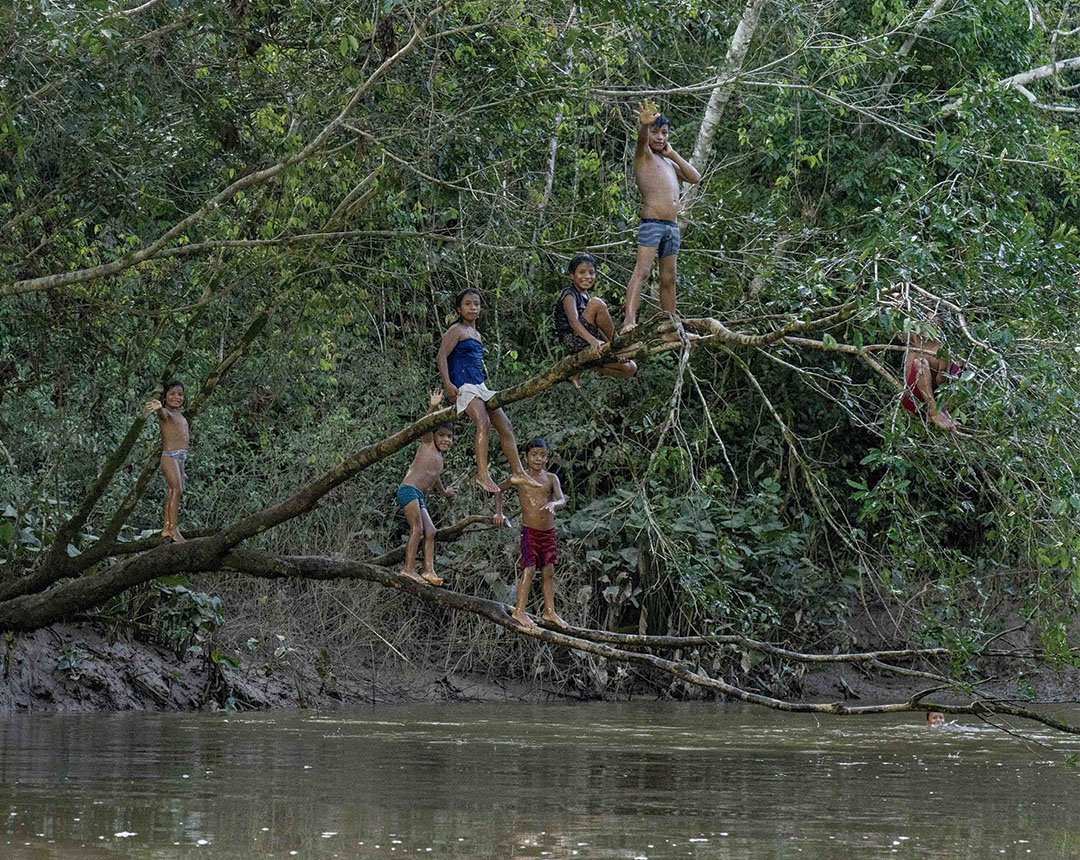
Welcome to a deeper exploration of the Mandari Panga community, an integral part of Yasuní National Park. Our community, with its rich cultural heritage and unique way of life, offers a window into the traditions and challenges of indigenous peoples in the Amazon Rainforest. Let’s embark on this journey to understand our history, daily activities, and the initiatives aimed at improving our quality of life.
Our Community: A Brief History
The Mandari Panga community was established in 1980 by a group of families led by Modesto Jordán Illanes Vargas and his wife, Mrs. Damiana Santamaría. They left their previous home in the Canelos community due to persecution by the Huaorani people. Originally from the small communities in the Pastaza and Napo provinces, our founders belonged to the Naporuna and Canelo ethnic groups, who have lived along the banks of the Pastaza and Napo rivers for thousands of years.
Our new home was set up on the left bank of the Tiputini River, just outside the boundaries of what is now Yasuní National Park, established in 1989. Initially, we formed an association to manage our territory as common lands, but in 1989, some members left to form their own community due to disagreements.
Administration and Structure
The Mandari Panga community is named after a native plant with leaves that extend across the ground. Since 1994, we have held legal title to our land, which is managed communally. Individuals are assigned areas to live on but do not have the rights to sell the land or make significant alterations.
Our community is governed by a General Assembly, the highest authority for issues related to organization, development, and project management. The General Assembly meets every two months, with extraordinary meetings held as needed. Each year, new community directors are democratically elected, including positions such as president, vice president, secretary, treasurer, trustee, and three members. These leaders oversee areas like health, education, environment, agriculture, and tourism.
Community Bonds and Support
In times of adversity, such as accidents or illnesses, we work together to support one another. We also maintain strong friendships with neighboring communities like Pompeya, San Francisco Chikta, and associations such as 12 de Febrero, Mocache, and Charapa.
Health and Basic Services
Our community currently lacks a medical clinic. For healthcare, we travel to Coca, where free medical care is available at public hospitals. Occasionally, a medical brigade from the Ministry of Public Health visits us for a day to address our health needs.
Our Customs and Language
About 90% of our population is of Kichwa descent, and we still speak our native language. We follow the traditional customs of our ancestors, living from hunting, fishing, and farming. We cultivate crops like cassava, bananas, potatoes, papaya, corn, cocoa, guayusa, and coffee, primarily for our own consumption. Traditional chicha, an ancestral drink made from cassava, is a staple in our diet. Every year, on our community’s anniversary, the women showcase their best crafts and perform dances to the rhythm of drums played by their husbands.
Daily Activities and Employment
Our community members dedicate their time to various tasks, such as tending to small farms or working in nearby towns. Many of us work as day laborers in construction or other sectors in the city of Coca, often traveling for several days at a time.
Community Needs and Projects
The Mandari Panga project, although privately operated, was established with the vision of using its profits to benefit our community. Under a signed agreement, the project includes direct payments for services provided, transparency in income and expenses, and contributions to community projects. These initiatives focus on improving education, employment, basic services, and medical care.
Education
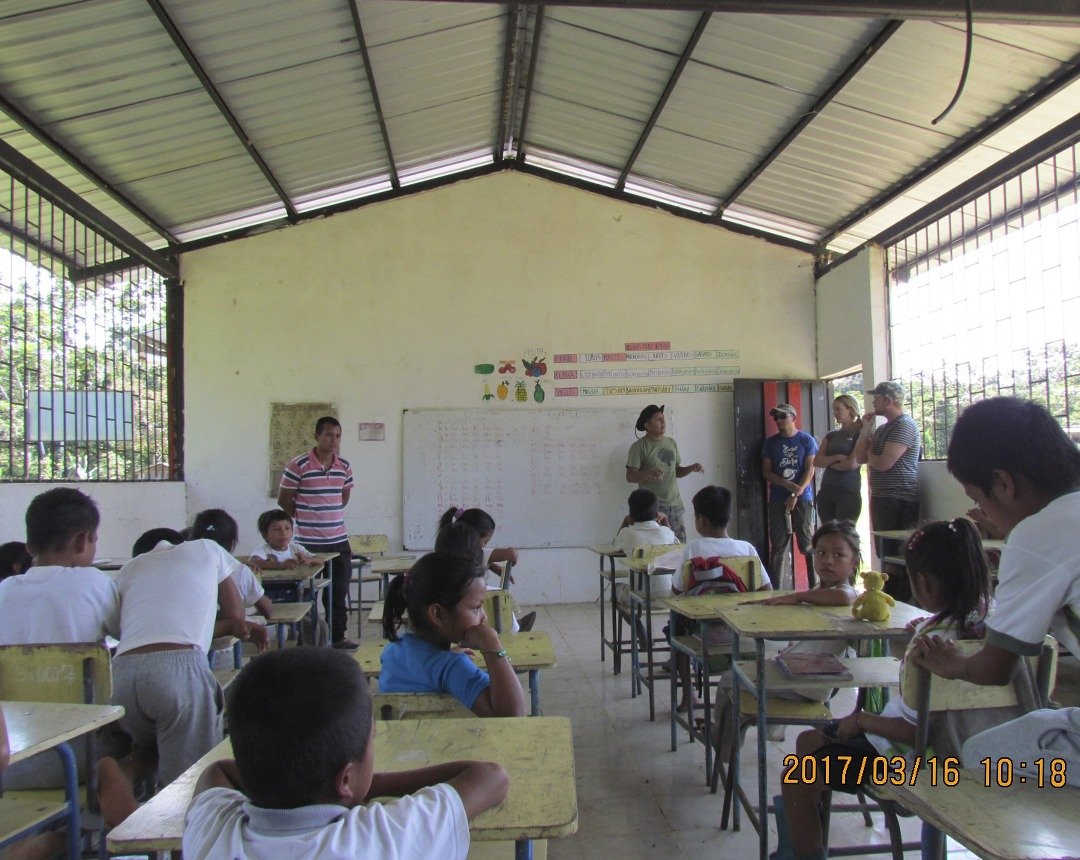
In 1997, we built the Bilingual Intercultural Community Educational Center (CECIB) Modesto Jordán Illanes Vargas, which provides initial education and the first six years of general education. However, with only one teacher for 40 children across six levels, and two classrooms, many children face challenges in completing their studies. Geographic and financial barriers also impact school attendance. Our project aims to enhance the infrastructure of the community school, improve access to both local and secondary education, and ensure that all children receive a quality education.
Employment
Our community has 89 working-age members, but many lack productive work. Those employed often face long commutes for low-paying jobs. The Mandari Panga project seeks to offer better employment opportunities within the community, providing good pay without the need for long commutes. We aim to train many members to work at the camp and encourage small-scale organic agriculture to supply the camp’s food, thus generating more income for the community.
Basic Services
In 2014, we received electricity infrastructure, but only the town center currently has access. Once installations are complete, about 70% of residents will have electricity, though affordability remains a concern. We lack landline phone service, and while some use cell phones, coverage is spotty. For drinking water, we rely on untreated rainwater collected from zinc roofs. There is no garbage collection service, and waste disposal methods are rudimentary. Most homes lack toilets, and the school’s latrine is not in use. Our project aims to invest in infrastructure improvements to enhance health and protect our environment.
Medical Care
Currently, there is no health clinic in our community. For emergencies, patients are transferred to a small clinic in Dayuma or a hospital in Coca. We also practice traditional medicine, using native plants to treat various ailments. A midwife assists with pregnancies, and we use herbal remedies for conditions like snakebites, colds, respiratory issues, fever, and more.
Ready for Your unforgettable adventure in the amazon?
We hope this overview of the Mandari Panga community offers insight into our way of life and the challenges we face. Through our projects, we aim to improve our quality of life while preserving our rich cultural heritage. We invite you to join us on this journey, whether by visiting our community, supporting our initiatives, or simply learning more about our unique corner of the Amazon Rainforest.
More info and guides for your trip to the Yasuni National Park